Tag Archives: ASL

Pick a Sign (but not just any sign)

I often get asked, “What signs should I teach my baby?”

Easy beginner words like MILK, MORE, ALL DONE, MOMMY, and DADDY are an easy start, but some parents aren’t sure what signs to pick next. Don’t worry, there are endless ways to incorporate American Sign Language into your daily lives, and choosing your first round of signs is easy!

I find a two-fold approach in choosing signs is always successful: some for you and some for baby. In other words, pick some signs that are routine-based, and also pick some signs that reflect what your baby is interested in. Remember, sign language is the bridge between communicating with your pre-verbal baby until they can speak, so pick signs that help name what’s happening in your day (routines) as well as what your baby wants to talk about (the fun stuff).

So signs like DIAPER, EAT, BATH, BED, UP, etc, are great choices for describing what’s happening or about to happen –everyone loves to know what’s happening next, even babies. Spend time talking about and naming what you’re doing, and your babies will soon learn your natural routines and feel calmer and more included in the daily schedule. I’ve always said, “Happy baby, happy family” (sigh), and I still believe that’s true.

And also pay attention to what your baby is telling you! Do they love a particular TOY or object in a BOOK you always have around? Do they giggle when they see DOGS outside on your strolls? Do they tap at the FISH tank in your house? Do they stare at certain colours, toys, anything? Then name it! Sign it! Discuss it! This is your chance to connect deeply with your babies because they will know you are noticing something they want to tell you, and you are responding. Bam! That’s communicating! You are an awesome parent and an outstanding communicator.

My daughter, Ella, noticed BIRDS while we were on neighbourhood strolls. I, of course, did not notice BIRDS; I was staring straight ahead, viciously sleep-deprived most days and barely picking up my own feet, but my baby was mesmerized by birds in the trees. She was always watching them flit around above us and listening to them chirp away. I hadn’t really noticed how much Ella loved watching birds until I saw her craning her neck to still face the trees after I had turned the stroller around to head home from the park.

I finally realized she was pointing at the birds and I had a mini-AHA! moment. I promptly taught her the sign for BIRD and started talking about those birds: “Hey, I see all the BIRDS! Look at the BIRDS! How many BIRDS do you see?” Her response was almost feverish, and a truly triumphant look came upon her face. She knew I knew what she wanted to talk about! And so began a massive daily dialogue about birds: birds in the trees, birds up high, birds down low, birds by the pond, birds in books, birds chirping outside every morning. I could visibly see how much she wanted to tell me about the birds, and it was fantastic. I’m guessing your baby will be feverish about something around you, too. Keep an eye out, and you’ll find your next sign.

Successful early communication with babies involves some mindful decisions about what to say, but it’s not tricky. Think about the words that will help you name your daily routines, and also be very aware of what your baby is interested in. These words will quickly become your arsenal of vocabulary to work on. It will build naturally as your baby grows, and as you make more routines and do more activities together. Always say the words aloud to your baby as you sign them, and repeat often to maintain context.

Oh, and please allow me to introduce you to our family’s new pet bird, Lucky!
IMG_2228

Lucky was rescued from a nearby alleyway by friends who couldn’t keep her. Both my kids are thrilled that we adopted a bird, but it’s especially cool to pull a favourite word from my daughter’s first roster of signs into her life as a big kid.

What does your baby want to talk to you about?
Processed with Rookie

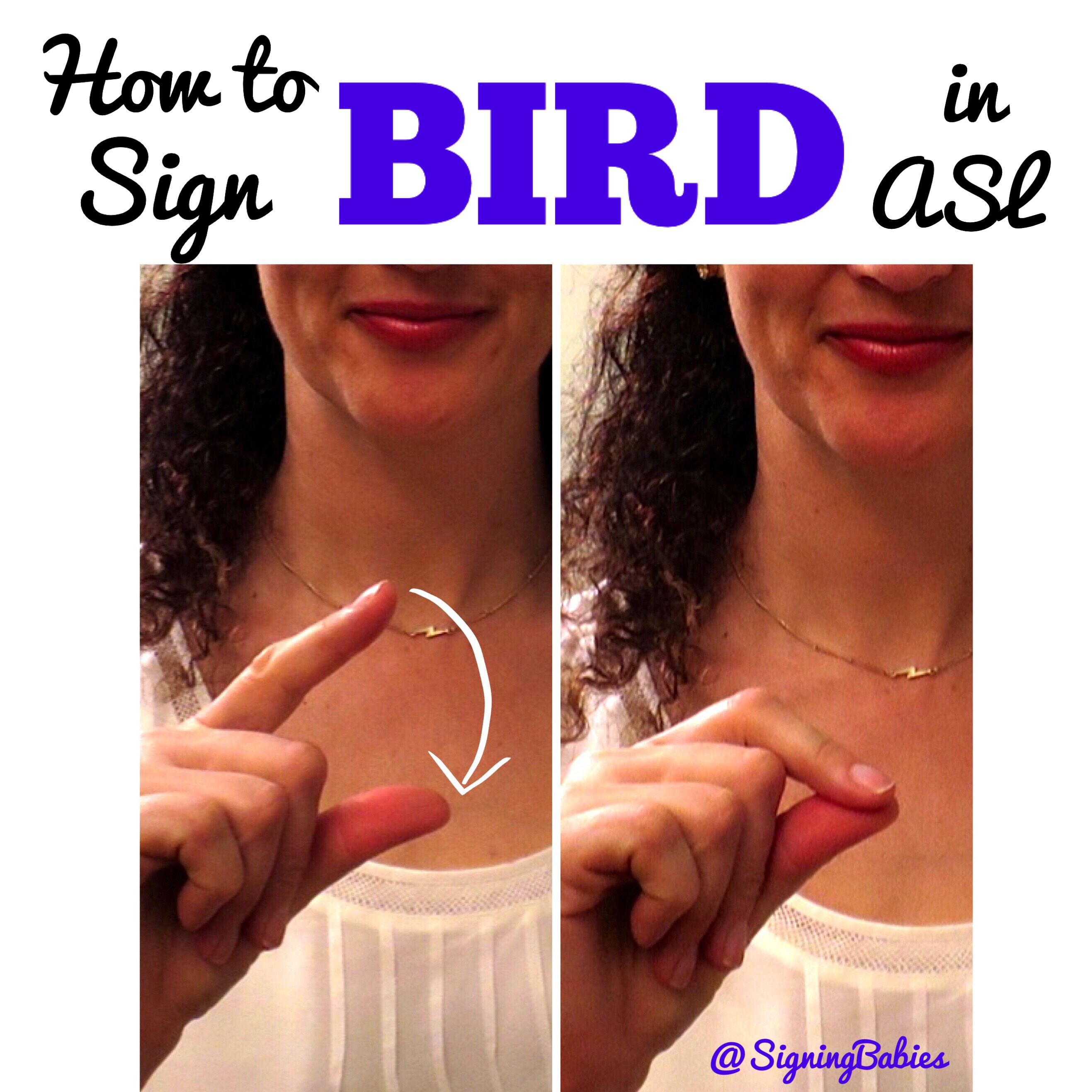
To sign BIRD in American Sign Language, tap your index finger to your thumb a few times, like the beak of a bird.

Why I Do What I Do

DSCF2041.JPG

To me, so much of the beauty of early communication with your baby is about ending the constant guessing games and being able to act on what you know -because they can tell you! As humans we all just want to be understood. And how beautiful is an exchange between you and your (non-verbal) baby where you know exactly what they want and can act on that expressed need? That’s what made me passionate about sign language. That’s why I started teaching classes to new families.

Many people ask me why I started teaching baby sign language. I always answer that it came from a personal passion for sign language, which is absolutely true. But, honestly? It was also kind of a fluke. I had worked with kids of all abilities when I taught preschool before having my own kids, but I’d never heard of sign language for babies until I became a parent myself. One of my best friends who was bravely blazing the trail of parenthood a few years ahead of me suggested looking into baby sign language as a fun activity to do while on maternity leave. So I looked it up and found a class and I tried it. The class got me out of the house, I met some other new parents, and it was fun. I learned quite a few signs, and for many months it remained a fun, light-hearted activity within my long days and nights as a new parent. Until the morning my daughter signed EAT.

At the age of 10 months, my daughter noticed a piece of pasta underneath our kitchen table. She pointed at the pasta, looked at me and signed EAT, and then dove under the table to go eat it! I was ecstatic to see her very first sign, clear as day. We celebrated and I started clapping and cheering, “Yes, EAT! EAT!”, even though I was a teensy bit appalled because I realized that noodle was from last night’s dinner. Oh well. I still considered it an outstanding victory in parenthood after months of not really knowing what the heck I was doing most of the time.

Her first sign was a day I’ll never, ever forget.

We signed and said EAT at every meal– “Okay, let’s go in the kitchen and get your breakfast, time to EAT!” or “Mmm, mommy has some apples, let’s EAT!”. Mealtime happened many times a day, every day, so there was lots of repetition, and I would also sign it when I was eating, even if she wasn’t joining me.  EAT was a natural first sign because I had practiced it with her a lot, and boy, was it nice to know what she wanted! Once she was able to sign EAT, it meant she could tell me when she was hungry or just wanted to talk about food. Prior to that, she and I could only play guessing games, which often ended in tears for one of us (and sometimes both of us). But all of a sudden, well before she could say the words for EAT, or MILK, or HUNGRY, she could sign them. WOW.

Sign language is the bridge between what our babies can tell us with their bodies before what they can tell us with their mouths.

I started teaching sign language classes because I became so passionate about what sign language can do for both babies and parents –the possibilities are endless. I still use sign language with my big kids everyday. My background in creating and teaching preschool programs allowed me to build a curriculum based on what I had learned in my first sign language class and also incorporate my own personal experience as a parent forging a path of greater communication with my family.

And so, my love for sign language really started as a very personal story of the pull I felt as a new mom who couldn’t stand not knowing what my baby wanted and why she cried. And my classes became what they are today –my passion. I’m so thankful I get to share this passion with you.

HATS (not) Optional

HAT in ASL  www.growingsigns.com

I love hats!

In summer, I know wearing a hat is the best way to protect myself from overheating, sun exposure, and glare. Same goes for winter, but for warmth and keeping dry (hats also really help on days when my hair could use some extra TLC but there’s no time to give it any).  But my family hasn’t always shared my same enthusiasm for wearing hats.

My first baby was born in early springtime, and by June, the rays of summer came hot & heavy upon us as we strolled and took in summer fun around town. Besides always using the stroller’s built-in sun shade, I remember popping lots of cute bonnets and brimmed hats into my diaper bag for her. By August, as she got older & more dextrous, I remember lots of cute bonnets and brimmed hats being tossed out of the stroller -she did NOT like wearing a hat.

Every time she’d pop her hat off, I’d pop it back on and sign HAT. Every day, over and over. Sometimes I’d try really roomy hats that I’d hope she wouldn’t feel being stealthily put on her from behind…no good. But I kept trying. HAT. We wear our HAT. Mommy’s putting on her HAT. Here’s your HAT.

The following summer when she was one, I found myself repeating HAT a lot: Let’s put on our HAT! Even though she was talking, I’d realized that it really helped to use signs along with my verbal words for commands or, shall we say, emphatic statements. One day, after weeks and weeks of relentless hat tossing (why do babies never tire of some things?) and HAT signing (well, I’m pretty stubborn too), I was almost blown off my own feet. As we were leaving the house for our daily jaunt, the sunlight almost blinded us through the open door: “Mommy, I need HAT!” Wait, what? She was reminding me!

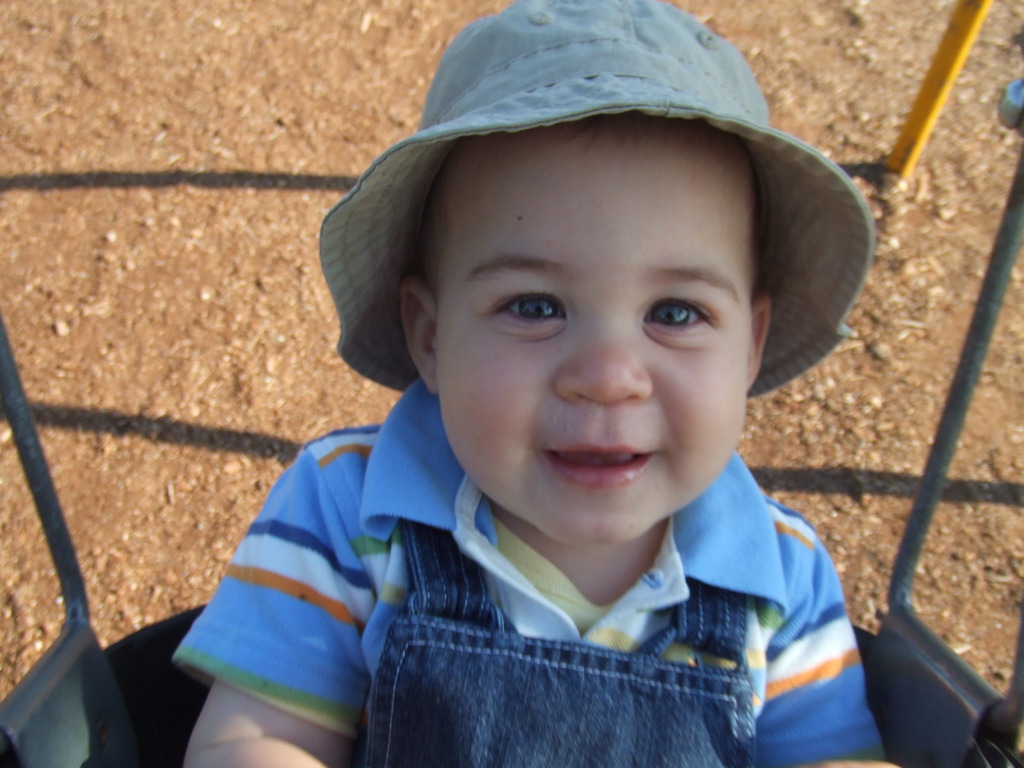
Now, I keep hats for all of us by the front door and back-ups in the car. My kids know wearing their hat is part of being outside, and thankfully, you can find cool-looking kids’ hats everywhere now. Luckily my son has been more amenable from a young age to wearing a hat and doesn’t fight me on it (there’s other battles, don’t worry).

DSCF1926

Yesterday, our family strolled down Fourth Avenue in the blazing sun and took in the annual Khatsahlano Street Party music festival, all in our straw hats.

Image

Don’t give up if your baby resists your efforts to wear a HAT. Try signing HAT every time you see hats, wear hats, pick up hats, put on hats. As I’ve realized is true with all parenting efforts, including teaching signs: consistency and repetition are key. And it helps if you wear a hat, too!

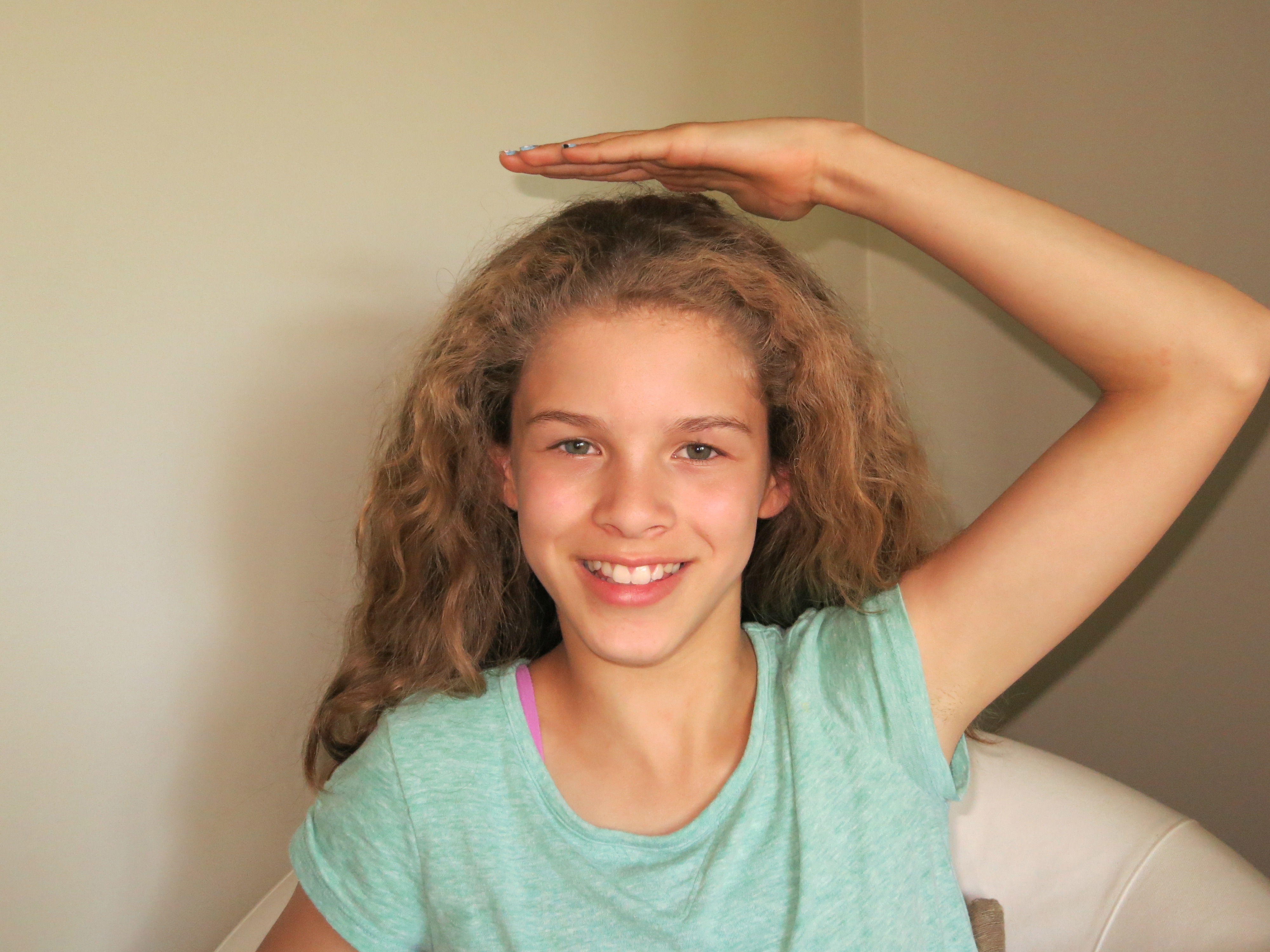
How to Sign HAT in American Sign Language

The American Sign Language sign for HAT is tapping at the top of your head with a flat hand to indicate where a hat is worn.